







Hard bounce vs soft bounce
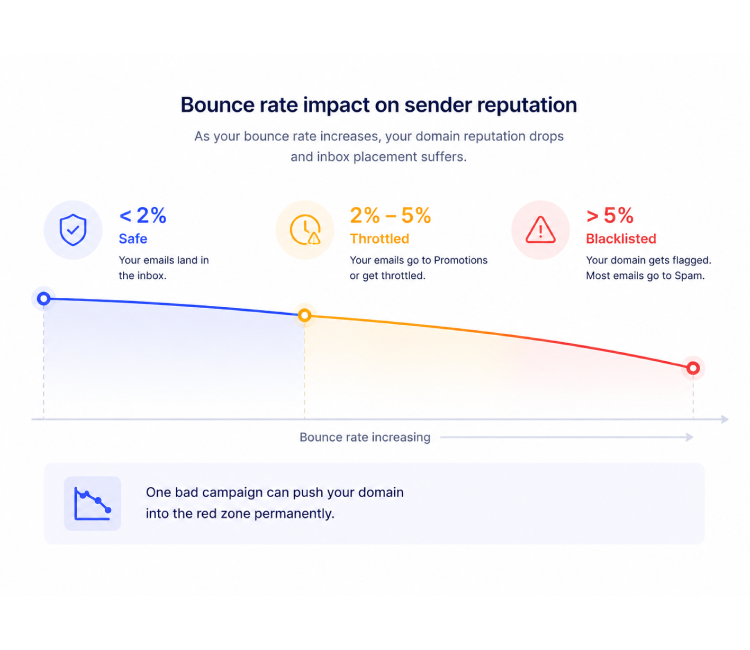
Not all bounces are equal. A soft bounce is temporary—caused by a full inbox or a busy server. Emails usually get delivered later. A hard bounce is permanent. It means the address doesn't exist, the domain is expired, or the server blocked you. Hard bounces are the real threat. They signal to Gmail and Outlook that your list is outdated, directly triggering spam filters and lowering your sender score. Always remove hard bounces immediately.
How to recover your sender score after high bounces
If your bounce rate spikes, don't panic—but act fast. First, pause all campaigns to prevent further damage. Second, run a full list verification to isolate and delete every hard-bouncing address. Third, warm up your domain by sending low-volume, highly engaged emails to your most active subscribers. Consistent engagement tells ISPs you're legitimate. Within 2–4 weeks of clean sending, your sender score will recover. Prevention is always cheaper than recovery.
Spam traps the silent killers of email campaigns
A spam trap is a fake email address created by ISPs and blacklist operators specifically to catch spammers. They are never used by real people and are hidden across the web. If you send to a spam trap, you don't just get a bounce—you get flagged as a spammer instantly. Unlike bounces, spam traps can blacklist your entire domain permanently. The only way to avoid them is through proactive list hygiene and verification before every major send.